
Cheerleaders


Fashion/Advertising Photography
My Fashion Photography:


Lara Jade:
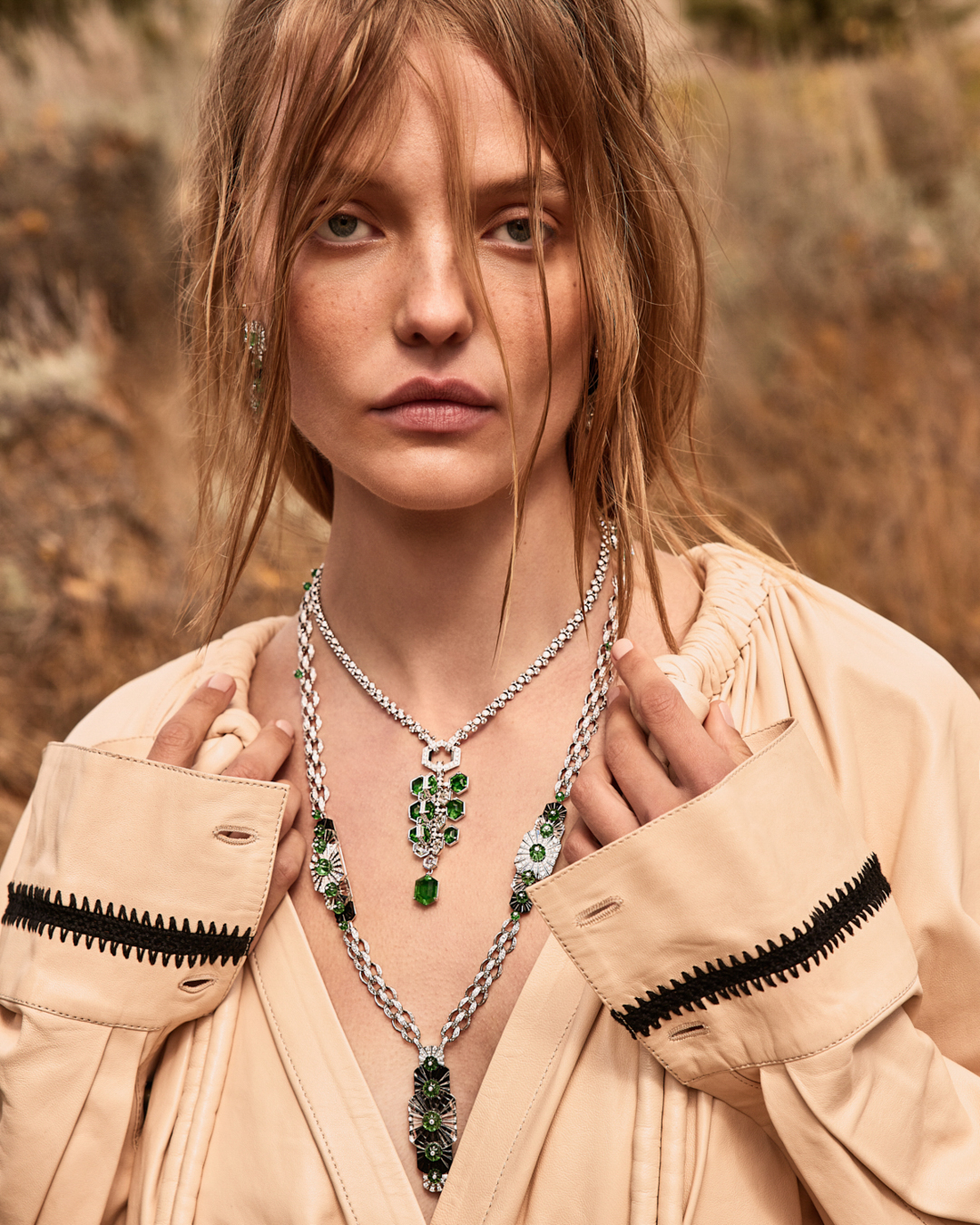
My Future Self

Business and Photography

Story Behind the Photo

They had stopped there only for a moment. The hallway was quiet, the metal shutter behind them pulled down for the evening, and the hum of the building settling into after-hours silence filled the space. It wasn’t a special place—just a corner they passed every day—but somehow it had become their place. He leaned back against the wall, hands tucked behind him, pretending to be casual. She stepped closer without thinking, like gravity had gently pulled her there. When she looked up at him, she smiled the way people do when they’ve already said a thousand things without speaking. He looked down at her like the rest of the world had paused. They had been friends first. Long conversations that stretched past midnight. Laughing about things that weren’t even funny. Slowly, quietly, somewhere between shared jokes and comfortable silence, love had grown. Not loud. Not dramatic. Just steady. Standing there, neither of them noticed the empty hallway or the closed door behind them. All that mattered was the way their eyes met, the way she leaned in just slightly closer, and the way he couldn’t stop smiling back. It felt like the kind of moment people remember years later—not because anything extraordinary happened, but because everything important was already there. And in that quiet hallway, beneath soft lights and ordinary walls, they both knew the same simple truth: They had found home in each other.
Cultural Photography


Valentine’s Day Photos


Resume

Multiple Exposures with Flash


Inspirational Poster

Pros and Cons of AI
5 pros of AI
- Saves time – AI can do tasks quickly, like grading work or answering questions.
- Helps with learning – Students can use AI to understand hard topics better.
- Works 24/7 – AI doesn’t get tired and can help anytime.
- Reduces mistakes – AI can be very accurate with data and calculations.
- Helps people with disabilities – AI tools like speech-to-text make life easier.
5 cons of AI
- Can replace jobs – Some people may lose jobs because of AI.
- Can be misused – AI can be used for cheating or spreading fake information.
- Lacks emotions – AI can’t understand feelings like humans do.
- Privacy risks – AI systems may collect personal information.
- Over-dependence – People may rely too much on AI and stop thinking for themselves.
Photo Printing

Photo Weaving

What’s In Your Head?

Halloween Portraits


Chalk Art with People

Book Face

Motion Blur


Pick a Something

Senior Portraits / Portraits


Macro Close Up


Indeed Job Search
Job 1: Marketing specialist l
I don’t meet the qualifications for this job because I have not graduated high school yet. To get this job, you need to have a high school diploma or a GED. You need to be experienced in macOS.
Job 2: Digital media specialist
I do not meet the qualifications for this job because I don’t have my license or my bachelor’s degree. I would need experience in YouTube and provide my Driver’s License and bachelor’s degree.
Job 3: Photographer, part-time faculty pool
I do not meet the requirements for this job because I need experience in teaching photography and a master’s degree.
Photomontage a la David Hockney

Block Printing

Equipment Buying List
Camera: $7,399.00
Lens: $2,299.00, $3,699.99, $699.00
Accessories:
Tripod: $149.95
Flash: $199.00
Bag: $199.00
Memory Card Case: $29.95
Memory Card: $139.99
Memory Card Reader: $79.99
Light Meters: $629.00
Color Balances: $119.00
Cleaning kit: $27.95
Battery Charger: $56.95
Photograph CTE and VAPA Classes at Jurupa + Poster


-

- Digital Audio


-
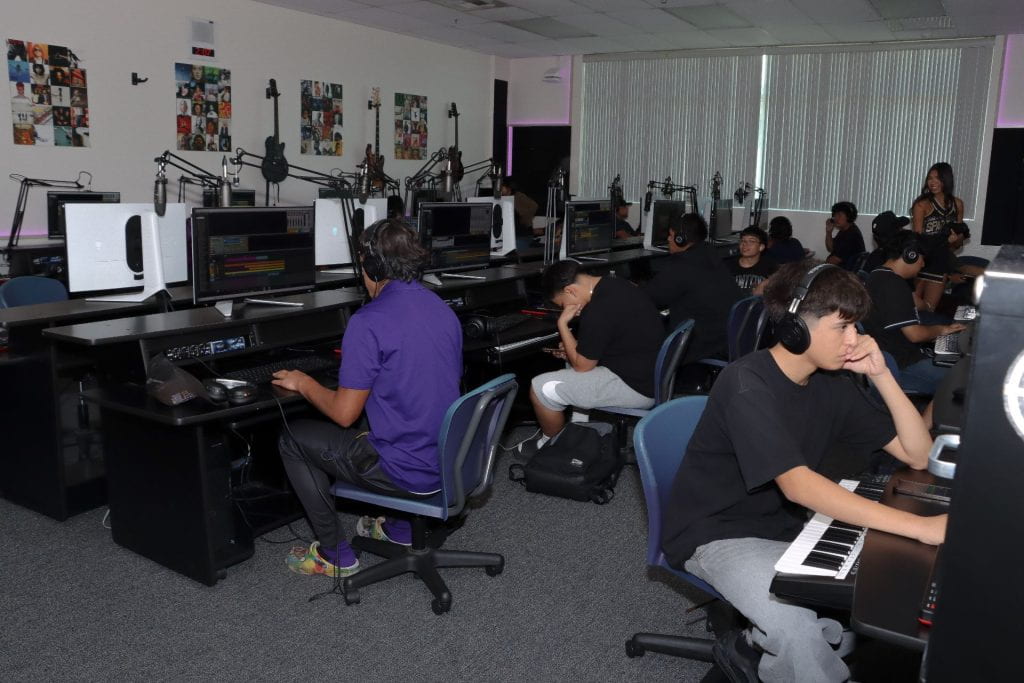
- Digital Audio

-

- Spanish

-

- Stage Craft

“Low Key” Lighting Portrait or Still Life


Double Color Exposures

Photography Logo

Copy and Paste Collage

Which Lense Should You Choose?
Telephoto lenses have longer focal lengths and are great for bringing distant scenes and subjects closer.
-
Refractive lenses contain multiple internal lens groups, also known as lens elements. They bend light and then straighten it back out before it hits the sensor or film to achieve a magnified image.
-
Mirror lenses contain multiple curved mirrors inside the lens body to bounce light, creating magnification. This allows a much smaller lens to achieve longer focal lengths.
When to use telephoto lenses
-
Shoot from the sidelines at sports events
-
Cover events where you will need to capture key moments without disturbing the moment or wasting precious time in fighting your way through crowds and obstacles just to get that perfect shot
-
Do professional wildlife and nature photography
-
Try your hand at astrophotography
-
Capture majestic images of the moon up close
-
Decrease the visual distance between your subject from the background
-
Produce better-looking bokeh
Wide angel lens offers a wider angle of view of 64° to 180°. Interchangeable wide-angle lenses have shorter focal lengths marked as smaller numbers. These are 34mm and below, where the field of view starts becoming wider than what “normal” lenses offer. When shooting wider with an ultra-wide angle or fisheye lens at focal lengths wider than 14mm, the image starts to become distorted at the outside edges of the frame.
When to Use a Wide-Angle Lens
-
Capture a table full of food or group shots in confined spaces
-
Show an entire room for real estate photography
-
Make images and videos look more immersive (using action cameras with built-in wide-angle lenses)
-
Take photos of buildings for outdoor architecture photography
-
Photograph skyscapes, cityscapes, and wide panoramic landscapes (if you don’t mind the distortion)
-
Conveniently take selfies without getting cropped out
-
Create artistic and abstract images, especially with fisheye lenses
-
Increase the visual distance between your subject from the background
Types of Photography
Landscape portraits seem to catch my eye as they’re always so beautifully taken, and the scenery always looks interesting. Abstract itself is a unique type of photography, but it keeps me guessing and wondering the background of the picture. I love to look at pet photography as well as it really is wonderful to see the different breeds and well-behaved animals. Astrophotography is also an eye-catching type of photography for me; it outlines our beautiful galaxies and stars.
Mirror Image

Triptych

Shallow Depth of Field


The photo simulator helped show me the different settings and how I can adjust the shutter speed and everything else. It was really helpful and helped me understand the main importance of the different settings and their own manual settings to what I can and can’t change. It also showed me how I can take a perfect photo without it being blurry, too exposed, or too underexposed.
- What are aperture, shutter speed and ISO? Aperture, shutter speed, and ISO are the three fundamental components of photography.
- When would you need to change your ISO? You’d change your ISO when you need to adjust brightness in a photo but can’t (or don’t want to) change your aperture or shutter speed.
- What is aperture and shutter priority settings? Aperture Priority (A/Av) and Shutter Priority (S/Tv) are two semi-automatic shooting modes on most cameras that give you more control over your photos without going fully manual.
- What are AF modes how do you change them? AF modes (Autofocus modes) control how your camera focuses on a subject specifically how it tracks movement and chooses what to focus on.
- Why do your need to meter the light to get the right exposure? Your photo may come out underexposed or overexposed.
- What is the difference between a normal, wide angle and telephoto lens? Field of view ,Perspective ,Use case
- What is white balance and why would you need to change it? White balance is a camera setting that adjusts the color temperature of your photos so that white objects appear truly white.
- What is depth of field and what is the difference between shallow and good? Depth of field refers to the range of distance in a photo that appears acceptably sharp.
- What are drive modes and metering modes? Drive modes control how many photos your camera takes when you press the shutter (e.g., single, burst, or timer). Metering modes determine how your camera measures light in the scene to set the correct exposure.
- What is exposure compensation? Exposure compensation lets you manually adjust the brightness of a photo by telling the camera to make the image brighter or darker than what it thinks is correct.